

Off-the-Shelf vs Custom Enclosures: When to Invest in a Bespoke Design
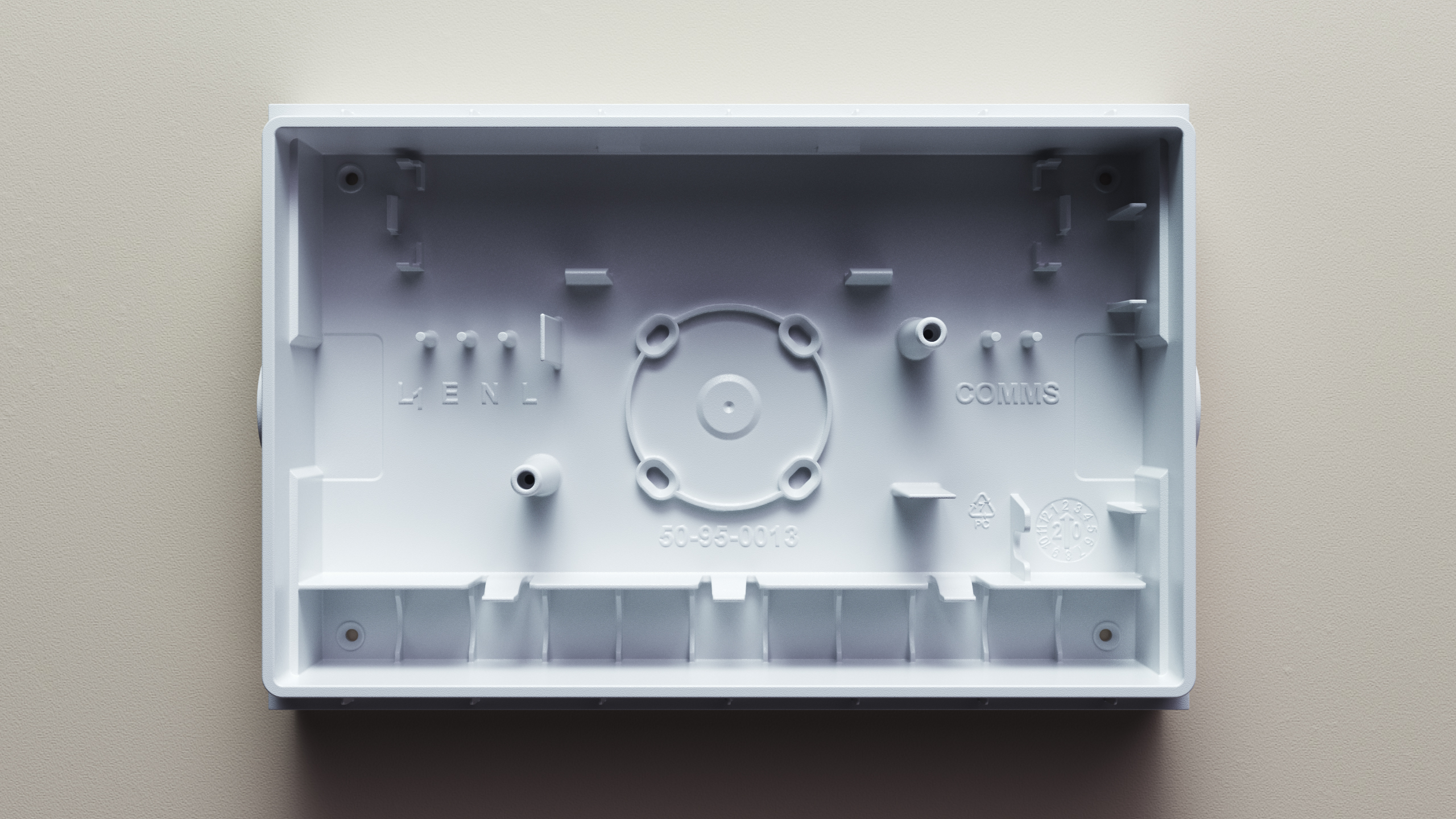
At some point in every electronics product development project, someone asks the question: do we buy a standard enclosure and modify it, or do we design one from scratch? The answer is not always obvious, and getting it wrong in either direction costs money.
Table of Contents
Choose off-the-shelf when custom was needed, and you end up with a product that’s compromised electronics crammed into a box that wasn’t designed for them, poor thermal management, an ugly cutout where a connector doesn’t line up, and a product that looks like it was put together from parts that don’t belong together. Choose custom when off-the-shelf would have been fine, and you’ve spent months and thousands of pounds solving a problem that didn’t exist.
At Bluefrog Design, based in Leicestershire, we design custom enclosures for products that genuinely need them across industrial, consumer, and medical sectors. But we also tell clients when a standard enclosure will do the job. This article is designed to help you make that decision before you commit budget.
What off-the-shelf enclosures are good at
Standard enclosures from manufacturers like Hammond, Bopla, Takachi, OKW, and others are available in a wide range of sizes, materials, and IP ratings. They’re designed to be general-purpose, which means they work well when your requirements are general-purpose too.
They make sense when the electronics fit comfortably within a standard form factor, the IP rating meets the application requirements without modification, EMC performance is not critical or can be achieved with internal measures, the product is for internal use, prototyping, or low-volume applications where brand identity is less important, and the time or budget for custom development is not available.
The advantages are clear: no tooling cost, no design lead time, proven IP and safety certifications, and immediate availability from stock. For early-stage prototypes, test equipment, internal tools, and low-volume industrial products, a well-chosen standard enclosure is often the right answer.
Where off-the-shelf enclosures fall short
The problems start when the product’s requirements move beyond what a standard box can accommodate. These limitations tend to surface in predictable ways:
The electronics don’t fit
Standard enclosures come in standard sizes. If the PCB layout, component heights, or connector positions don’t align with what’s available, you’re forced to either redesign the electronics to fit the box (which defeats the purpose) or cut, drill, and modify the enclosure to fit the electronics (which compromises the finish, the IP rating, and the professional appearance of the product).
Thermal management is inadequate
Standard enclosures are not designed around your specific thermal requirements. If the electronics generate significant heat, a general-purpose box may not dissipate it effectively. Adding ventilation holes reduces the IP rating. Adding a fan adds noise and a component that will fail. A custom enclosure can integrate thermal management into the structure itself heat sinks, conductive paths, optimised airflow in a way that a modified standard box cannot.
The product looks like it was assembled from parts
In any market where buyers assess quality by appearance which is most markets a standard enclosure with cutouts, stick-on labels, and visible modifications signals low investment and low confidence in the product. A custom enclosure designed as part of the product communicates intentionality, quality, and brand identity. This matters in consumer markets, medical environments, and any industrial application where the product is visible to the end customer.
EMC and IP requirements can’t be met
Modifying a certified standard enclosure cutting holes for connectors, adding cable entries, machining windows for displays can invalidate its original IP and EMC certifications. If your product requires a specific IP rating or must pass EMC testing, you may need to re-test the modified enclosure, which adds cost and time. A custom enclosure can be designed from the start to meet the required standards, with properly sealed cable entries, bonded joints, and controlled apertures.
The middle ground: modified standard enclosures
There is a path between fully off-the-shelf and fully custom. Many standard enclosure manufacturers offer modification services: CNC machining of cutouts, printed or engraved graphics, custom colour powder coating, and additional mounting features. Some offer semi-custom options where standard internal dimensions can be combined with modified external features.
This approach can work for products where the internal volume is adequate, the modifications are limited to cutouts and graphics, the product doesn’t require a distinctive industrial design, and the production volume doesn’t justify full custom tooling.
The limitation is that you’re still working within someone else’s design constraints. The proportions, form, material, and surface finish are defined by the standard product. Modifications can improve it, but they can’t transform it into a purpose-designed enclosure.
When custom is the right answer
A custom enclosure is justified when one or more of the following are true:
The electronics have a specific form factor that doesn’t match standard sizes — particularly common with products that have multiple boards, unusual connector layouts, or large displays.
The product requires a specific IP rating that cannot be maintained after modifying a standard enclosure. IP65 and above almost always requires purpose-designed sealing.
EMC compliance is demanding and the shielding strategy needs to be designed into the enclosure from the start, not retrofitted.
Thermal management is a critical constraint — the enclosure needs to function as a heat sink, or the thermal budget is too tight for a general-purpose box with added ventilation.
The product is customer-facing and needs to communicate quality, brand identity, and professional intent through its appearance and build quality.
The production volume is high enough that the tooling investment is amortised to a negligible cost per unit — typically above 1,000–2,000 units for injection moulded enclosures, though fabricated metal enclosures have no tooling cost at any volume.
The product requires integrated features — snap-fits, cable routing channels, PCB mounting bosses, display bezels, gasket grooves — that cannot be achieved by modifying a standard enclosure.
What a custom enclosure development involves
A custom enclosure project follows the same core process as any product development project: industrial design to define the form and user interface, engineering to develop the structure, thermal management, sealing, and EMC strategy, prototyping to validate fit, function, and appearance, and design for manufacture to prepare production data.
For a fabricated metal enclosure, there is no tooling investment — the parts are laser-cut and formed from flat sheet, so the design can go from CAD to first parts in days. For an injection moulded enclosure, the tooling lead time is typically 8 to 16 weeks, and the tool itself costs £8,000 to £50,000 or more depending on complexity. The choice between fabrication and moulding is driven by volume, cost per unit, material requirements, and geometric complexity.
A typical custom enclosure project from concept to manufacturing data takes 6 to 12 weeks, depending on complexity and the number of design iterations required. For a more detailed overview of the full product development process, see our guide to going from prototype to production.
If you’re deciding between off-the-shelf and custom for your product, we can help you make the right call. Bluefrog Design is based in Leicestershire and designs custom enclosures as part of integrated product development across industrial, consumer, and medical sectors. If it needs to be custom, we’ll design and engineer it. If a standard enclosure will do the job, we’ll tell you. Get in touch to discuss your project.
View more of our Product Development Services
If you would like to hear more on how we can improve the quality of your products or help with your product development, please contact Bluefrog Design at mail@bluefrogdesign.co.uk
FAQs
When should I use an off-the-shelf enclosure?
Off-the-shelf enclosures are suitable when the electronics fit a standard form factor, the IP and EMC requirements are met without modification, the product is for internal use, prototyping, or low-volume applications, and brand identity is not a primary concern. They offer no tooling cost, no design lead time, and immediate availability.
When should I invest in a custom enclosure?
A custom enclosure is justified when the electronics don’t fit standard sizes, when specific IP or EMC performance is required, when thermal management is demanding, when the product is customer-facing and needs to communicate quality and brand identity, or when production volumes make the tooling investment economically viable. Fabricated metal enclosures have no tooling cost and can be custom at any volume.
How much does a custom enclosure cost compared to off-the-shelf?
A standard enclosure might cost £5 to £100 per unit from a catalogue. A custom enclosure has additional design, engineering, and potentially tooling costs. However, when modification costs, additional assembly components, compromise costs, and re-testing are included, a custom enclosure at production volume often works out comparable to a heavily modified standard one — with a better end product.
Does modifying a standard enclosure invalidate its certifications?
It can. Cutting holes for connectors, adding cable entries, or machining openings can compromise the original IP and EMC certifications. If the product requires specific IP or EMC performance, a modified standard enclosure may need to be re-tested and re-certified, which adds cost and time to the project.
How long does a custom enclosure project take?
A typical custom enclosure project from concept to manufacturing data takes 6 to 12 weeks. Fabricated metal enclosures can go from CAD to first parts in days. Injection moulded enclosures require an additional 8 to 16 weeks for tooling. The timeline depends on complexity, the number of design iterations, and whether the enclosure is part of a wider product development project.
Ready to get started on a project?

Socials


