

Designing Products for Manufacture in 2026: What Actually Matters
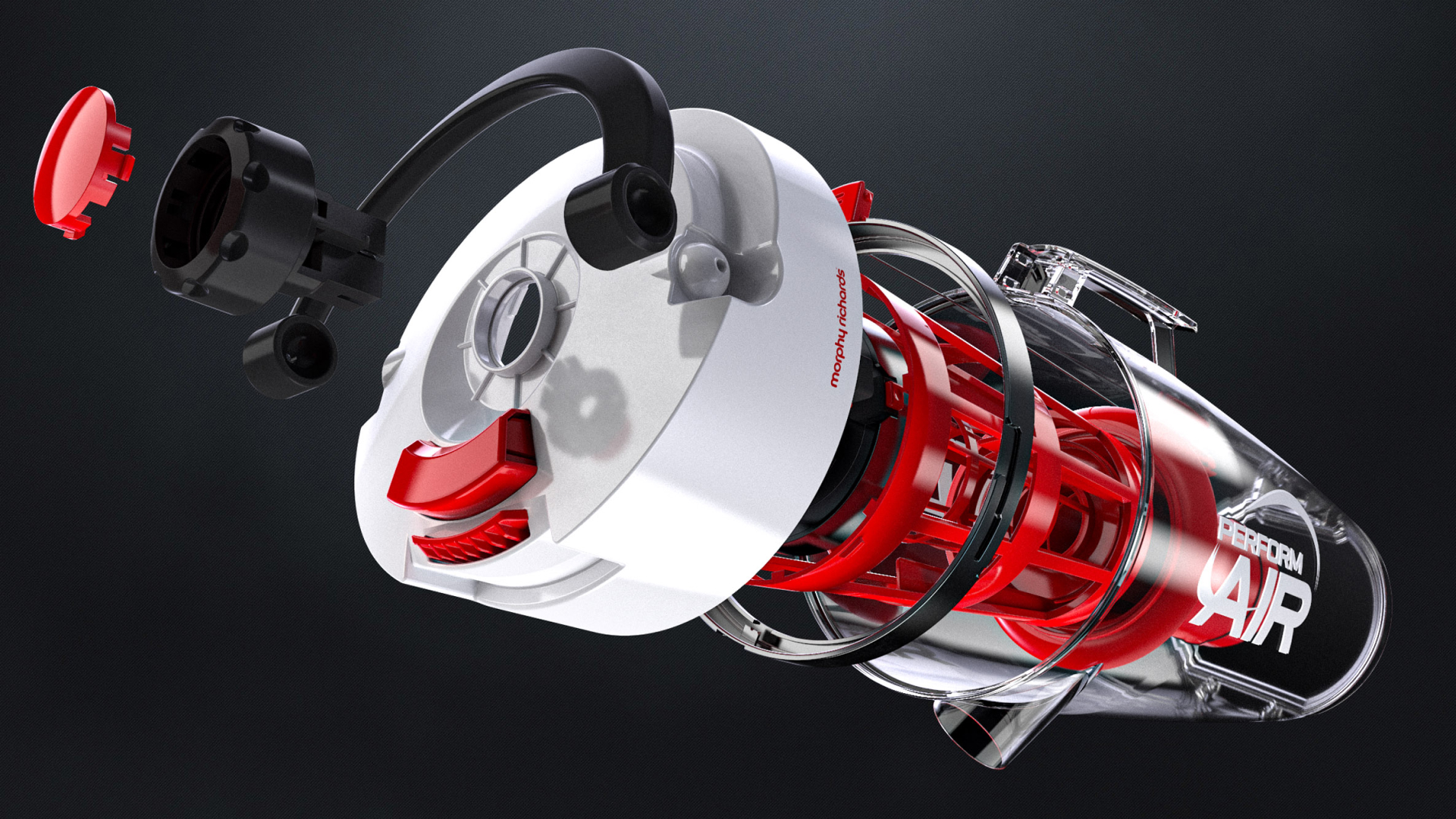
Most products don’t fail because the idea was bad. They fail because somewhere between the concept and the production line, a series of engineering and design decisions were made that didn’t account for how the product would actually be manufactured, assembled, transported, or maintained. The gap between a product that looks good in CAD and a product that can be reliably produced at the right cost is where most projects run into trouble.
Table of Contents
At Bluefrog Design, we’ve spent over twenty years working across consumer, industrial, and medical sectors. The projects vary enormously, but the reasons products succeed or fail in manufacture are remarkably consistent. Here’s what we’ve found actually matters.
Design for the manufacturing process, not around it
The most consequential decisions in any product development project are often the ones made earliest: what material, what manufacturing process, and why. These choices cascade through everything that follows, part count, assembly method, tooling cost, unit economics, and timeline.
The question isn’t just “what material looks right?” It’s “what manufacturing process gives us the right balance of quality, cost, and volume for this specific product?” Sheet metal fabrication, injection moulding, die casting, CNC machining, each has different tooling implications, different minimum order quantities, and different constraints on geometry. Choosing the wrong process for the application doesn’t just increase cost; it can make the product unbuildable at the target price.
A well-chosen manufacturing process simplifies everything downstream. A poorly chosen one creates problems that compound through every subsequent stage of development.
Reduce complexity before it reaches the production line
Part count is one of the clearest indicators of manufacturing complexity. Every additional component adds a supplier relationship, a quality check, an assembly step, and a potential failure point. The discipline of reducing part count, without compromising function, is one of the most valuable things a design team can do.
This goes beyond just consolidating parts. It means designing assemblies that go together in one logical sequence. It means standardising fixings so the production line isn’t managing six different screw types. It means thinking about sub-assemblies that can be built and tested independently before final integration. And it means considering the person doing the assembly, their skill level, their environment, their tooling. A product that’s elegant in CAD but requires a specific sequence of twenty-three operations to assemble is not a well-engineered product.
The products that manufacture well are the ones where someone has already asked: “How does this go together, and what happens when something doesn’t fit?”
Engineering and aesthetics are not separate conversations
There’s a persistent idea that industrial design is about how a product looks, and engineering is about how it works, and these are two separate activities. In practice, the best products come from treating them as one conversation.
Material choice affects appearance. Manufacturing process constrains form. Assembly method influences where split lines fall. Compliance requirements dictate minimum wall thicknesses, grounding provisions, ventilation. These aren’t engineering problems that the designer works around they’re design parameters that should be shaping the aesthetic from the start. A product that looks considered and well-made is usually one where the engineering logic is visible in the design language, not hidden behind a decorative shell.
This is particularly important in industrial and medical sectors where the product needs to communicate competence and reliability. The user whether they’re an operator on a factory floor or a clinician in a hospital makes judgments about a product’s quality based on how it looks, how it feels, and how it’s put together. Those judgments are not superficial. They’re informed by experience, and they’re usually right.
Compliance is a design input, not a final hurdle
In regulated sectors, medical devices, safety-critical industrial equipment, consumer electronics, compliance with standards like ISO 13485, EN 60601, UKCA, CE, and RoHS is not something you deal with at the end. It’s something that needs to be factored into the design from the first concept.
Standards define material requirements, safety margins, testing protocols, labelling, and documentation. If these aren’t considered early, the project hits a wall when the product reaches the compliance stage and fundamental design changes are needed to meet requirements that were always going to apply. This is one of the most common and most expensive reasons for project delays.
Treating compliance as a design input rather than a checkpoint means it becomes part of the engineering rationale. Grounding provisions, electrical clearances, material traceability, biocompatibility these shape the product in ways that are often invisible to the end user but fundamental to getting the product to market.
Think beyond the first unit
A product isn’t finished when the first prototype works. It’s finished when it can be manufactured consistently, at the right cost, at the required volume, and supported in the field. That means the design needs to account for things that don’t show up in a concept render: how it’s packed and shipped, how it’s installed, how it’s serviced, and what happens when a component needs replacing.
Products that are designed only for the first unit tend to be expensive to produce, difficult to maintain, and fragile in production. Products that are designed for the thousandth unit with consideration for manufacturing variation, supply chain resilience, and field serviceability are the ones that succeed commercially.
This is the difference between a product that works and a product that works as a business. The engineering decisions that make a product viable long-term are rarely glamorous, but they’re the ones that matter most.
The user is part of the engineering brief
User experience in industrial design is not about making things look friendly. It’s about understanding how the product will actually be used by whom, in what environment, under what conditions and designing accordingly.
An operator wearing gloves needs controls that can be operated without fine motor precision. Equipment in a factory environment needs to withstand cleaning chemicals, impact, and temperature variation. A product that will be installed by a facilities team needs to be assembled with standard tools in a confined space. These aren’t UX niceties; they’re engineering requirements that should be in the design specification from day one.
The products that users trust are the ones that feel like someone understood their working environment. That understanding comes from asking the right questions early and making sure the answers inform the engineering, not just the styling.
Our Experience in designing products for manufacture
At Bluefrog Design, we’ve been doing this for over twenty years taking products from initial concept through to complete manufacturing data across consumer, industrial, and medical sectors. The principles above aren’t theoretical. They’re what we’ve learned from delivering real projects where the product had to actually be manufactured, meet standards, and work in the real world.
If you’re developing a product and want to make sure the engineering decisions are right from the start, get in touch. We’re based in Leicestershire and work with businesses across the UK and beyond.
View more of our Product Development Services
If you would like to hear more on how we can improve the quality of your products or help with your product development, please contact Bluefrog Design at mail@bluefrogdesign.co.uk
FAQ’s on Design for Manufacture
What is industrial design and how is it different from engineering?
Industrial design covers the overall form, usability, and appearance of a product, while engineering focuses on the internal structure, mechanisms, and manufacturing feasibility. In practice, the two are closely linked, material choice, manufacturing process, and compliance requirements all affect both how a product looks and how it works. The best results come from treating them as a single, integrated process rather than separate stages.
Why does the choice of manufacturing process matter so much?
The manufacturing process determines tooling cost, unit cost, minimum order quantities, lead times, and what geometries are achievable. Choosing the wrong process for the application can make a product too expensive to produce at the target price point, or create quality issues that are difficult to resolve later. Getting this decision right early avoids costly redesigns downstream.
What does ‘design for manufacture’ actually mean?
Design for manufacture means making engineering decisions throughout the design process that ensure the product can be produced consistently, at the right cost, and at the required volume. This includes reducing part count, standardising fixings, designing logical assembly sequences, choosing appropriate materials and processes, and considering production variation. It is not a separate stage it should influence every decision from concept onwards.
How does Bluefrog Design approach industrial product development?
Bluefrog Design takes products from initial concept through to complete manufacturing data. Our approach integrates industrial design and engineering from the start, so the product is designed to be manufactured, not just to look good in a render. We work across consumer, industrial, and medical sectors, and our team includes designers, engineers, and manufacturing specialists. We are based in Leicestershire and have been operating since 2003.
Ready to get started on a project?

Socials


