

The Top Trends Shaping Industrial Product Design in 2026
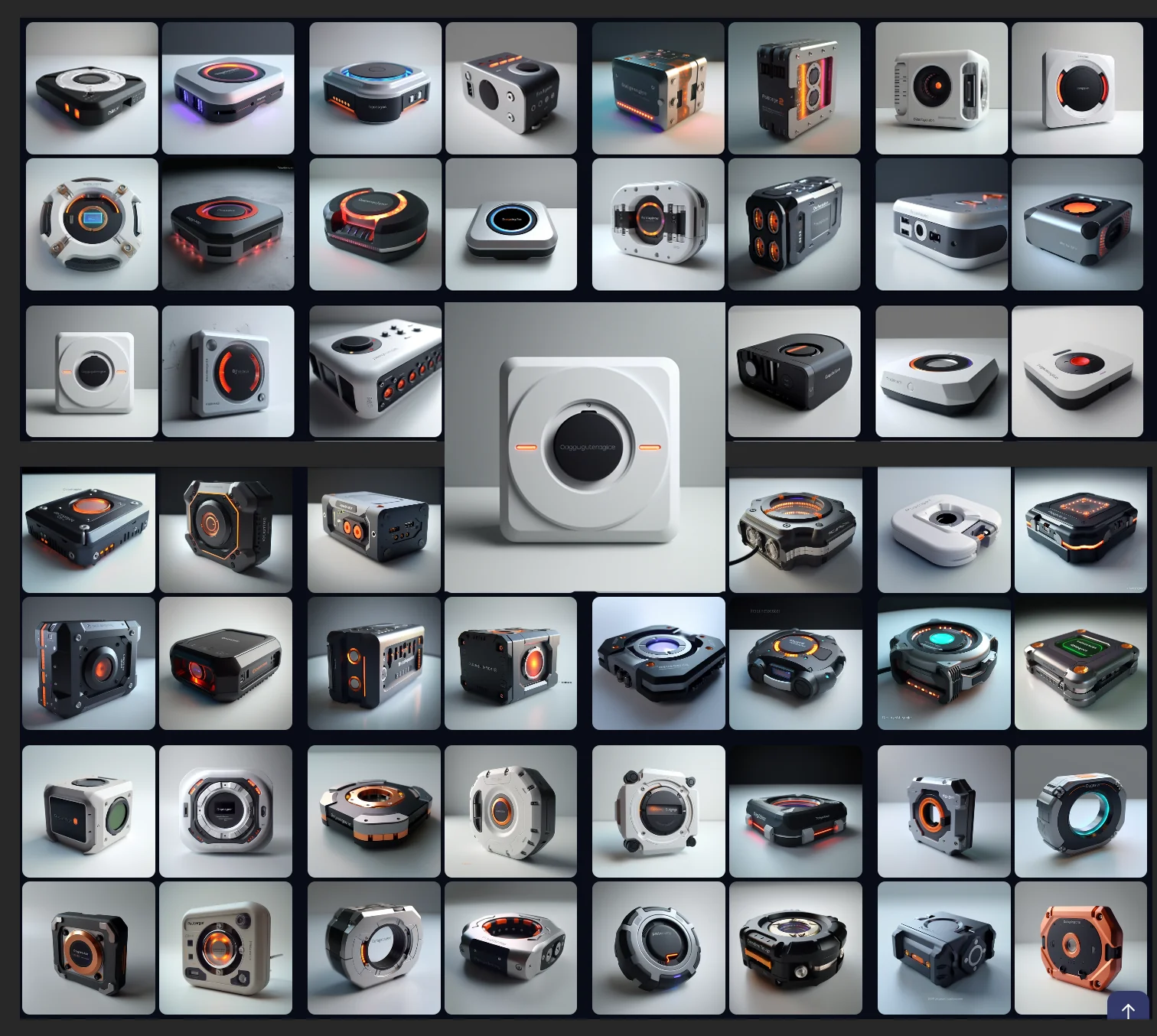
Industrial product design is evolving faster than ever. The way products are conceived, engineered and manufactured is being reshaped by advances in artificial intelligence, growing pressure to design for sustainability, and rising expectations from end users who want products that are smarter, more intuitive and built to last.
Table of Contents
At Bluefrog Design, we work with manufacturers across the consumer, industrial and medical sectors to take products from initial concept through to full manufacturing data. That means we see these trends playing out first-hand in the projects we deliver. Here are the key trends shaping industrial product design in 2026 and what they mean for businesses developing physical products.
How Is AI Changing Industrial Product Design in 2026?
AI has moved well beyond generating concept images. In 2026, the real impact of artificial intelligence in product design is in generative design and engineering optimisation — tools that can explore thousands of design variations against specific manufacturing constraints, material properties and performance requirements.
Generative design platforms like those built into Autodesk Fusion and Siemens NX are enabling engineers to achieve weight reductions of 30–50% on components while maintaining or improving structural integrity. For manufacturers, this translates directly into material cost savings and faster time to market some companies are reporting design cycle reductions of up to 75%.
AI is also being applied to quality control, predictive maintenance planning and automated CAM programming. Hexagon’s ProPlanAI, for example, reduces the time taken to program factory machine tools by 75%, cutting a significant bottleneck in the production workflow.
At Bluefrog, we’re integrating AI tools into our design and engineering workflow to help our clients get to production-ready designs more efficiently. It’s not about replacing the designer it’s about giving the team better data to make better decisions earlier in the process.
What Does Circular and Sustainable Design Look Like in 2026?
Sustainability in product design has matured significantly. The conversation has moved past “use recycled materials” into a much more rigorous approach: circular design. This means designing products from the outset to be disassembled, repaired, refurbished or recycled at end of life.
In practice, circular design means choosing screw-fastened assemblies over glued or welded joints, selecting mono-materials where possible so components don’t need separating for recycling, and designing modular architectures where individual parts can be replaced without scrapping the whole product.
Legislation is accelerating this shift. The EU’s Ecodesign for Sustainable Products Regulation is pushing manufacturers to provide digital product passports and demonstrate measurable reductions in environmental impact. For UK manufacturers exporting to Europe, this is no longer optional.
Bio-based materials are also gaining ground from algae-derived plastics to recycled composites that can reduce virgin resource use by up to 50%. The key challenge is balancing sustainability goals with manufacturing feasibility and cost, which is where having engineering expertise alongside design capability makes a real difference.
At Bluefrog Design, our approach to Design for Manufacture has always considered the full lifecycle of a product. We work with clients to select materials and manufacturing processes that meet both performance requirements and sustainability targets.
Why Is Modular Design Becoming the Standard for Manufactured Products?
Modularity in product design isn’t new, but in 2026 it’s becoming an expectation rather than a nice-to-have. Manufacturers are increasingly designing products with interchangeable components that can be configured, upgraded or replaced independently.
The benefits are significant across the product lifecycle. For the manufacturer, modular architecture means a single platform can serve multiple product variants, reducing tooling costs and simplifying inventory. For the end user, it means easier maintenance, longer product life and the ability to upgrade specific features without replacing the entire unit.
This trend is particularly strong in industrial and medical equipment, where downtime costs are high and products need to adapt to evolving regulations or user requirements. Designing for modularity requires careful planning at the engineering stage — getting the interfaces between modules right is critical to ensuring reliability and ease of assembly.
This is an area where Bluefrog’s combined design and engineering capability is especially relevant. We don’t just design how a product looks — we engineer the architecture that makes modularity practical and manufacturable.
How Are Smart, Connected Products Changing the Design Landscape?
The Internet of Things has been talked about for years, but 2026 is the year it’s becoming genuinely practical for a much wider range of manufactured products. The IoT market is projected to reach approximately $1.3 trillion globally, and industrial IoT is the fastest-growing segment.
What’s changed is the hardware. Edge AI chips are now small enough and efficient enough to embed meaningful processing power directly into products — enabling on-device decision making without relying on cloud connectivity. Battery-powered IoT sensors can now operate for years without replacement, making connected features viable even in products where regular charging isn’t practical.
For industrial product designers, this opens up new possibilities: predictive maintenance alerts, real-time performance monitoring, usage data that informs next-generation design improvements, and user interfaces that adapt based on context. It also creates new design challenges around antenna placement, thermal management, and designing intuitive interfaces for complex data.
Security is also a growing consideration. Hardware-enforced security — including secure boot and tamper-resistant identity — is becoming a baseline requirement, particularly for medical and industrial applications.
At Bluefrog, we’re seeing more clients asking for connected features in their products. Our prototyping and engineering team work closely with electronics partners to integrate smart functionality without compromising the physical design or manufacturability of the product.
What Role Does Inclusive and Accessible Design Play in Product Development?
Inclusive design is no longer a niche consideration — it’s becoming a commercial advantage. Products designed to be usable by the widest possible range of people, including those with disabilities, older users and people from different cultural backgrounds, reach larger markets and build stronger brand loyalty.
In 2026, this means going beyond basic ergonomic guidelines. It means conducting user research with diverse participant groups, designing interfaces that work for users with varying levels of dexterity and vision, and considering the full range of environments where a product will be used.
For industrial and medical products, accessibility is often a regulatory requirement as well as a design choice. Products that are intuitive to operate reduce training time, lower error rates and improve safety — all of which directly affect the bottom line for manufacturers and their customers.
User-centred design has always been central to how we work at Bluefrog Design. We incorporate user research, journey mapping and testing throughout the design process to make sure the end product works for the people who actually use it.
How Is Minimalism and Intuitive Functionality Shaping Product Aesthetics?
The trend towards visual simplicity in product design continues to strengthen in 2026. Clean lines, reduced visual noise and thoughtful material choices are replacing feature-heavy or overly decorative approaches. But this isn’t minimalism for its own sake — it’s driven by a focus on intuitive functionality.
Products that are visually clear communicate their function more effectively. A well-considered visual hierarchy — using contrast, colour and form to guide the user’s attention — reduces cognitive load and makes products easier to use across all age groups and ability levels.
Strategic use of colour remains important. Rather than applying colour broadly, leading brands are using colour accents on key interaction points to create both visual appeal and functional clarity. This approach ties directly into inclusive design principles, making products more intuitive without relying on text-heavy instructions.
At Bluefrog Design, our design team balances aesthetics with engineering reality. We focus on creating products that look refined and feel intuitive, while ensuring every design decision supports manufacturability and cost targets.
What Emerging Technologies Should Product Designers Watch in 2026?
Beyond the major trends above, several emerging technologies are worth paying attention to as they mature into practical design tools.
Digital Twins
Digital twin technology — creating a virtual replica of a physical product that updates in real time — is moving from concept to practical application in manufacturing. Digital twins allow designers and engineers to simulate performance, test modifications and predict maintenance needs before making physical changes. For complex products, this significantly reduces development risk and cost.
Advanced Additive Manufacturing
3D printing has evolved well beyond prototyping. Metal additive manufacturing, multi-material printing and large-format processes are now viable for end-use production parts in certain applications. This expands what’s geometrically possible in product design and enables small-batch manufacturing that would have been prohibitively expensive with traditional tooling.
Augmented Reality in Design Review
AR is becoming a practical tool for design review and client collaboration. Being able to visualise a full-scale product in its intended environment before committing to tooling helps clients make more confident decisions and reduces late-stage design changes. At Bluefrog, our 3D visualisation and animation capabilities help clients see and interact with designs before anything is physically made.
Staying Ahead in Industrial Product Design
The trends shaping industrial product design in 2026 all point in the same direction: products need to be smarter, more sustainable, more adaptable and designed with the end user firmly in mind. For manufacturers, keeping up with these shifts isn’t just about staying current — it’s about maintaining competitive advantage.
What sets Bluefrog Design apart is that we don’t just design how a product looks — we engineer how it’s made. From initial concept through to complete manufacturing data, we help brands and businesses solve problems and launch products that are always better by design.
Looking to develop a new product or update an existing one? Get in touch with our team to discuss your project.
Ready to get started on a project?

Socials


